A business sign can cost anywhere from a few hundred dollars to $25,000 or more. At Raleigh Sign Solutions, a simple PVC sign can start at a few hundred dollars, a post and panel sign starts around $1,500, and a custom lit stone or brick monument usually runs $5,000 to $25,000 or more. Where your sign lands depends on its size, what it is made of, whether it lights up and what it takes to install it on your site.
The rest of this guide explains each of those cost drivers, what Raleigh’s permit rules add, and how to get a quote you can actually budget around.
Typical price ranges at Raleigh Sign Solutions
These are the ranges Raleigh Sign Solutions publishes for its most common sign types. Treat them as starting points, not quotes. Each one assumes a typical version of that sign. A bigger sign, a more involved design or a hard site moves the number up.
- Simple PVC signs: can start at a few hundred dollars. These are flat panels, usually with printed or cut vinyl graphics, and no lighting. A large set of acrylic letters on standoffs costs more. See acrylic and PVC signs.
- ADA room signs: typically $30 to $150 per sign, depending on material and finish. Whole buildings are priced from a sign list after a walk-through. See ADA and braille signs.
- Post and panel signs: from about $1,500. A panel mounted between two posts, set in the ground. See post and panel signs.
- Channel letters: a small storefront set usually starts at a few thousand dollars. Bigger or more detailed sets cost more. See channel letter signs.
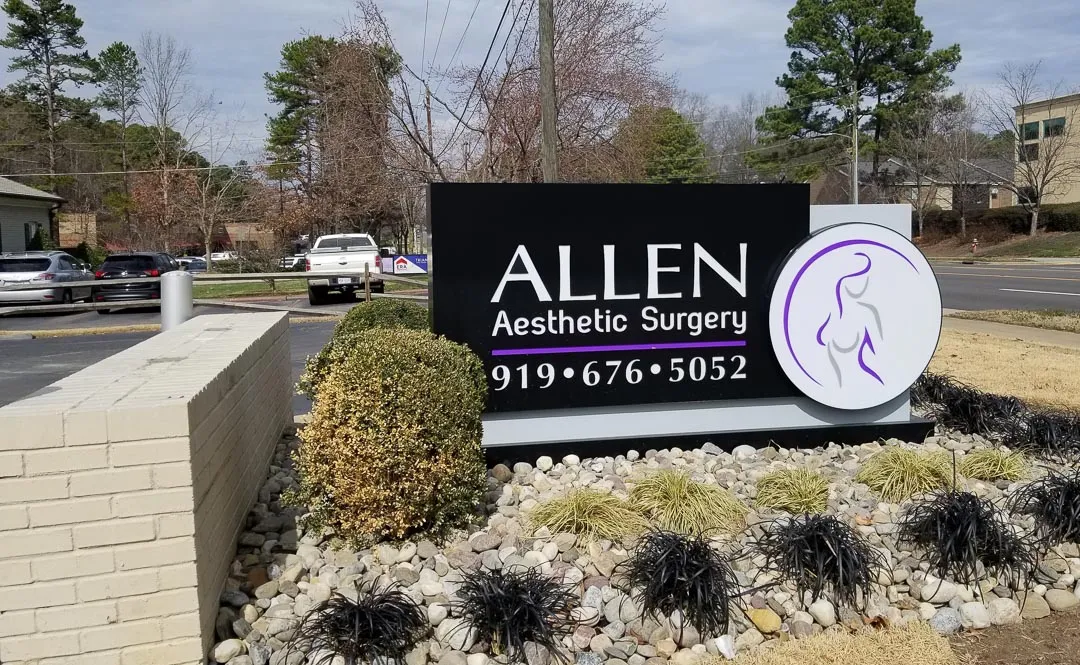
- Custom lit stone or brick monuments: usually $5,000 to $25,000 or more. See monument signs.
The chart below shows the three ranges that come with specific dollar figures. Channel letters and PVC signs are left off because their published ranges are described in words, not exact numbers.
The gap between the bottom and the top of the monument range is wide on purpose. A monument can be a modest panel on a low base, or a long masonry wall with lit dimensional letters and a power line trenched in from the building. Both are monuments. They are not the same project.
If you are still deciding which kind of sign fits your building, our guide to types of business signs walks through the options first.
What actually drives the cost
Every sign quote is built from the same handful of choices. Once you know them, a quote stops looking like one mystery number and starts looking like a list of decisions you can change.
Size
Bigger signs use more material, take longer to build and often need heavier structure to hold them. Size also has a ceiling you may not expect: the city. Raleigh’s sign rules cap how large each type of sign can be. A high profile ground sign, for example, can be no more than 100 square feet on a structure no more than 15 feet tall, under Section 7.3.10 of the Unified Development Ordinance. Wall sign area is set at two square feet per foot of building wall facing a public street. So the right size is the one that reads well from the road and fits what your property allows, not simply the biggest one you can afford.
Materials
A flat PVC or aluminum panel is the low end. Carved high density urethane, dimensional metal letters, acrylic with a polished edge and real stone or brick all cost more, and they last and look different too. For ground signs, the base is often where the money goes. A masonry base is real construction work, built on a footing, and it is a big reason a stone or brick monument sits at the high end of the range.
Lighting
Lighting adds parts and labor at every stage. A lit sign needs LED modules, power supplies and a cabinet or letter built to hold them, and someone has to bring power to it. Channel letters are a good example: each letter is its own small lit box, so a long name with many letters costs more than a short one at the same height. Halo lit letters, where light glows from behind, and face lit letters are built differently and priced differently. Our illuminated signs page covers the main lighting styles.
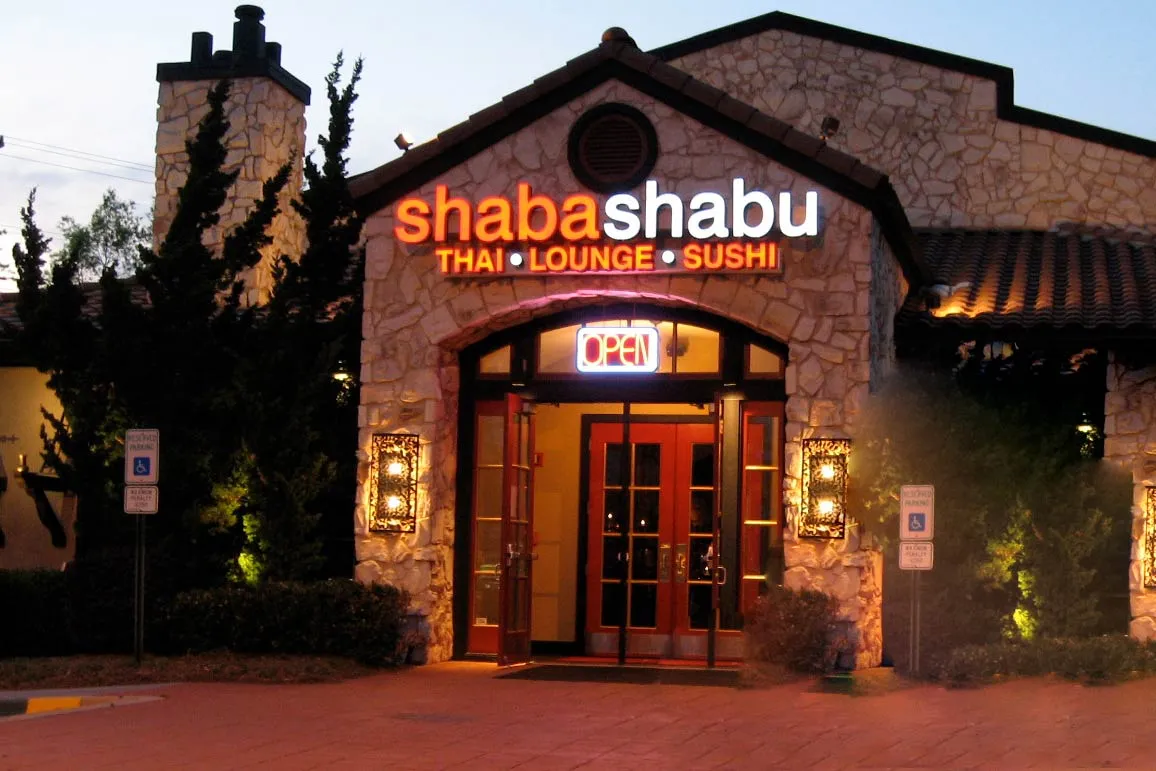
Lighting also changes the permit. In Raleigh, a lit sign needs an extra application and an electrical inspection on top of the sign permit, which we cover below.
Custom fabrication
A rectangle is cheaper to build than a shape. Logos with fine lines, cut-out shapes, layered letters and unusual mounting all add shop time. That does not mean you should avoid them. It means a quote for a detailed logo sign and a quote for a plain lettered panel are not comparable, even at the same size.
Design
If you already have a clean vector logo and know what the sign should say, design time is small. If your logo only exists as a blurry image, or you want a new one, that work comes first and is priced separately. Some logos also need small changes to build well as a sign, since hairline strokes and tight gaps are hard to cut and light. Our logo design and branding team handles that before fabrication starts. If your building already carries other signs, matching their colors and letter style takes a little design time too.
Here is how those choices tend to push a price in one direction or the other. Use it to see which choices to revisit if a quote comes in over budget.
| Cost driver | Keeps the price lower | Pushes the price higher |
|---|---|---|
| Size | Sized to what the site needs | Larger, or at the code maximum |
| Materials | PVC or aluminum panel | Stone, brick, carved or metal letters |
| Lighting | Unlit | Internally lit, halo lit, LED display |
| Shape | Rectangle, plain lettering | Custom logo shapes, layers |
| Site | Easy access, power nearby | New footing, trenching, lift work |
Installation and site work
The sign itself is only part of the bill. Getting it safely onto your building or into the ground can be a large share of a project, and it is the part most often missing from a low quote.
Wall signs need anchors suited to the wall. Brick, block, concrete, wood framing, metal panels and glass all take different hardware, and every hole in an exterior wall has to be sealed. Taller mounting heights mean a lift, which adds time.
Ground signs need a concrete footing sized for the sign’s height and the wind it will catch. Digging means locating buried utilities first. North Carolina 811 notifies its member utilities, which locate their own lines free of charge, and state law requires three full working days of notice before digging. One detail matters for lit monuments: NC 811 does not mark private lines. If power already runs from your building across the lot, that line has to be found another way, and the caller is responsible for getting private lines located.
Lit signs need a circuit. On a wall, the wiring often runs through a raceway behind the letters. For a monument out by the road, it can mean trenching power across a lawn or parking area, which is one of the larger swing factors in a monument quote.
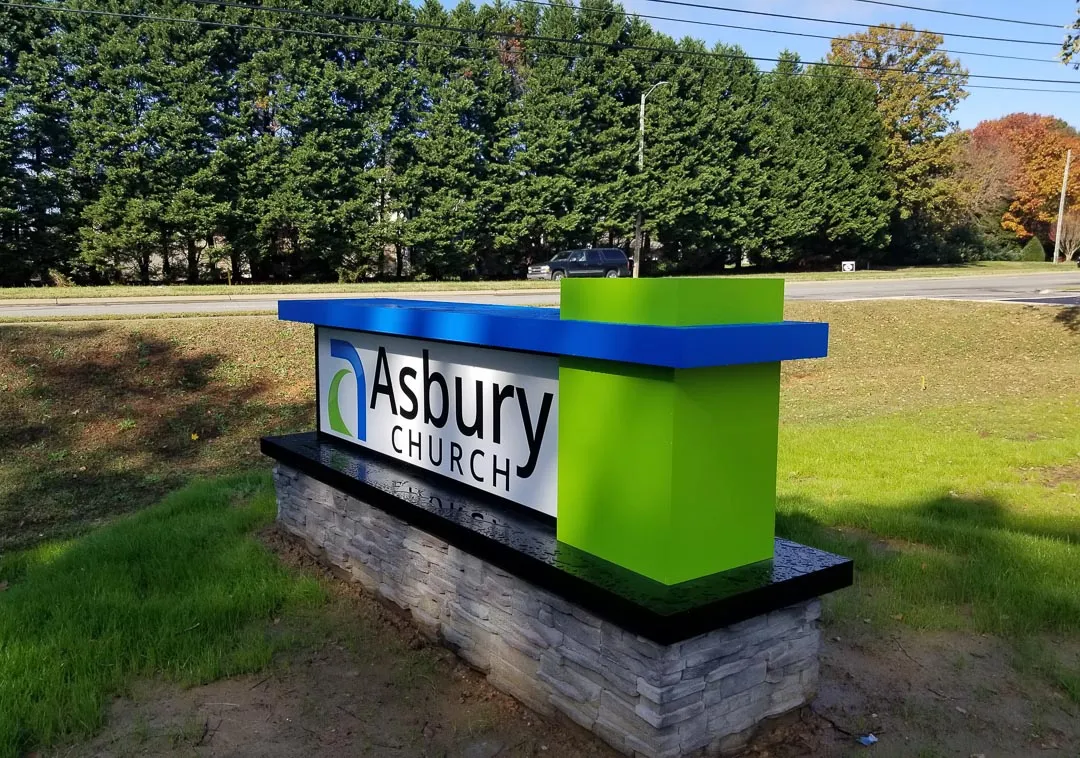
None of this is visible in a photo of a finished sign, which is why two signs that look alike can be priced far apart. Our sign installation page explains how we plan the install before fabrication starts, so the mounting points, footing and wiring are settled before anything is built.
Permits and engineering
Most permanent business signs in Raleigh need a city permit. The City of Raleigh sign permit page lists wall signs, ground signs, projecting signs and temporary signs as needing one, and each sign needs its own application package. A few permit rules add real cost to certain signs:
- Taller ground signs need engineering. Raleigh’s Sign Permit Checklist says a ground sign over 42 inches must have a sealed engineered footing detail. That means paying for an engineer’s design.
- Lit signs need an electrical inspection. The same checklist requires a non-residential permit application for an illuminated sign and says an electrical inspection is required in addition to the sign permit.
- Shared sites need a sign plan first. When several buildings or businesses share a project, such as a shopping center, the city requires an approved common signage plan before it issues sign permits there.
The city sets its own permit fees in its Development Fee Guide and offers a fee calculator, and those fees can change. That is why we check the current fee for your specific sign when we quote, instead of guessing at a number here. Each Triangle town, including Cary, Durham, Apex and Wake Forest, has its own sign rules and application.
Our sign permits page covers what the city asks for and what we prepare on your behalf.
Cost by sign type, in plain terms
If you are weighing two kinds of signs against each other, here is how they usually compare on cost.
Post and panel versus monument. A post and panel sign puts your name at street level for less than a full monument, starting around $1,500 at Raleigh Sign Solutions. A monument gives you a solid base, room for lighting and a more permanent look, and it costs more because of the base, the footing and often the power. If you want stone or brick, see brick and stone monument signs.
Channel letters versus a cabinet sign. Channel letters are built one letter at a time, so they look sharp but add cost as your name gets longer. A cabinet sign is one lit box with a printed face, and replacing the face later is simpler. A small storefront set of channel letters usually starts at a few thousand dollars.
Interior signs. Indoor signs skip the weather, the footing and the trenching, so they cost far less per sign. ADA room signs typically run $30 to $150 each at Raleigh Sign Solutions. The total depends on how many rooms you have, so a building package is priced from a sign list. If you are planning room signs, read our guide to ADA sign height requirements so the install gets mounting heights right the first time.
Repairing what you have. If you already have a sign with a sound cabinet and structure, new LEDs or a new face can cost less than starting over. Our sign repair team will tell you plainly which way makes more sense.
How to get an accurate quote
A ballpark number helps you plan. A real quote needs a few details from you and a look at the site. Raleigh Sign Solutions gives a free quote, and for monuments and other ground signs it follows a site visit.
Send these with your request and the first number you get will be much closer to the final one:
- Your logo file. A vector file such as AI, EPS or PDF saves design time.
- Photos of the spot. The wall or the patch of ground where the sign will go, with something for scale.
- A rough size, or the distance it needs to read from. A sign read from a parked car and one read from a busy road are different signs.
- Lit or unlit, and where power is. Tell us if there is an outlet, a junction box or old sign wiring nearby.
- Landlord or HOA rules. Many shopping centers and office parks set their own sign standards.
- Your deadline. Monuments and lit signs usually take 4 to 8 weeks at Raleigh Sign Solutions, and permit review is the part that varies most.
Then ask every shop the same questions, so the quotes line up:
| Ask this | Why it matters |
|---|---|
| Is installation included? | Install can be a big share of the cost |
| Who handles the electrical? | Lit signs need power and an inspection |
| Is the footing and engineering included? | Raleigh needs a sealed footing detail over 42 inches |
| Are permit drawings and fees included? | Fees are set by the city and can change |
| What size and materials is this based on? | Two quotes may not describe the same sign |
The cheapest quote is only cheaper if it covers the same sign, installed, permitted and working. A line by line comparison is the fastest way to find out.
Next step: get your sign priced
If you have a monument or ground sign in mind, start with our monument signs page. For a lit storefront, see channel letter signs. When you are ready for a number you can budget around, request a free quote with your logo, a photo of the spot and a rough size. We design, permit, build and install in one shop, so the quote covers the whole job.
Frequently asked questions
How much does a monument sign cost?
At Raleigh Sign Solutions, a simple post and panel sign starts around $1,500, and a custom lit monument with stone or brick usually runs $5,000 to $25,000 or more. Size, materials, lighting and site work decide where your sign lands, and you get a free quote after a site visit.
How much do channel letters cost?
A small storefront set of channel letters usually starts at a few thousand dollars at Raleigh Sign Solutions. Taller letters, more letters, a logo shape or a more involved lighting style all push the price up.
Is the permit included in the sign price?
Ask every shop this directly. City permit fees are set by each town and can change, so some quotes list them as a separate line. In Raleigh, fees come from the city's Development Fee Guide, and lit signs also need an electrical inspection.
Why do two sign quotes differ so much?
Usually because they are not quoting the same sign. One may include lighting, installation, electrical work, the footing or permit drawings and the other may not. Compare the size, materials, lighting and what is included line by line before you compare totals.
What is the cheapest kind of business sign?
Flat, unlit signs cost the least. At Raleigh Sign Solutions, simple PVC signs can start at a few hundred dollars. Banners cost even less but are meant to be temporary.