There are five broad types of business signs: signs that stand on the ground outside, signs mounted on your building, lit signs, signs inside your space, and temporary or printed signs. The right type depends on where your customers are when they need to find you, whether they look for you after dark, and what your town and landlord allow. This guide walks through each type, what it does well, and what it costs you in money, time or flexibility.
How to narrow down your options
Before you look at materials or lighting, answer three plain questions. The answers rule out most of the list for you.
Where are people when they first look for you? Someone driving a four lane road at 45 miles an hour needs a sign that is big, close to the street, and readable in a couple of seconds. Someone walking a shopping center needs a sign over your door and maybe one that sticks out from the wall. Someone already inside your building needs to find the right suite, the restroom or the front desk.
When do they look? A restaurant that does most of its business at dinner needs a sign that works at night. A dentist open eight to five can often skip lighting on the main sign, though a lit sign still helps on short winter afternoons.
What are you allowed to put up? Town sign codes limit size, height and lighting. Shopping center landlords often set the type, color and mounting method for every tenant. HOAs and office parks may have their own design rules. Our sign permit page covers how that process works in Raleigh and nearby towns.
Most businesses end up with two or three sign types working together: one that gets people to the property, one that confirms the right door, and one or more that help once they are inside.
Signs that stand on the ground outside
Ground signs sit at the edge of the property, near the road or the entrance. They do the first job: telling drivers to turn in here. You can see every outdoor option on our exterior signs page.
Monument signs
A monument sign is a low, solid sign on a base, set near your driveway or entrance. Because it sits at eye level for drivers, it gets read right as people are deciding where to turn. It works best for offices, medical practices, churches, schools and any building set back from the street. The tradeoff is cost and permanence. A monument needs a foundation, often needs a permit and a survey of where it can go, and is not something you move later.
Brick and stone monument signs build the base from masonry so the sign matches the building or the neighborhood entrance. They last as long as the property and look established. The tradeoff is that masonry takes more time and coordination than an aluminum cabinet on a base.
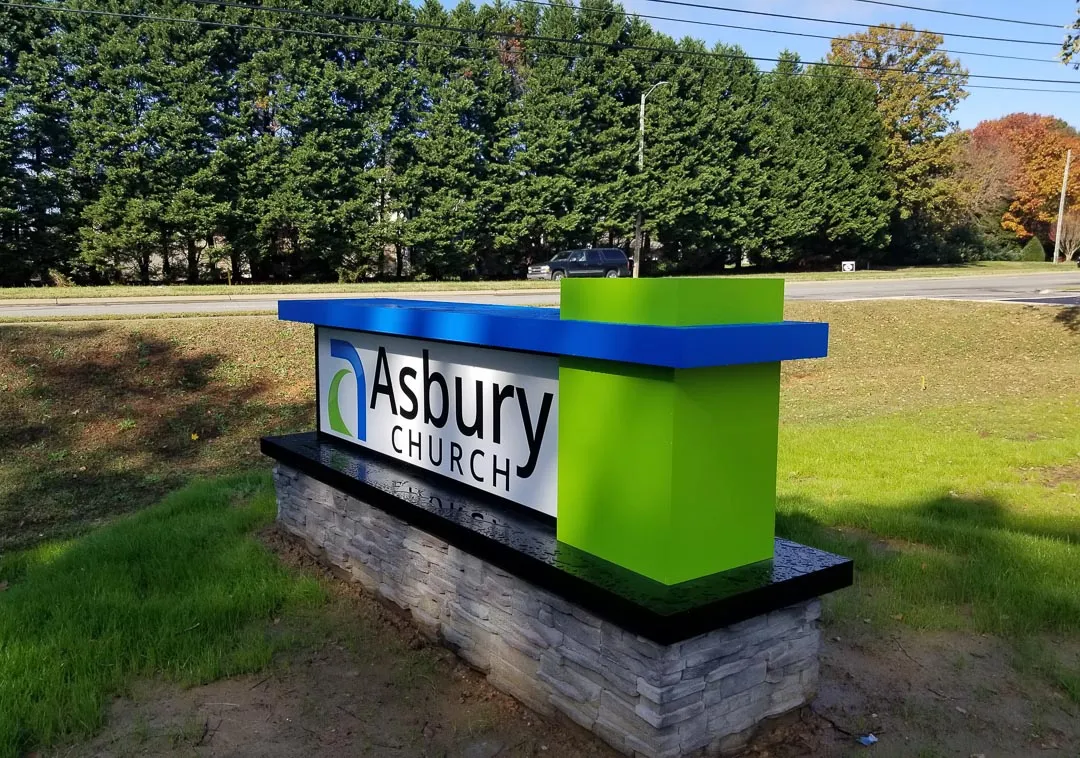
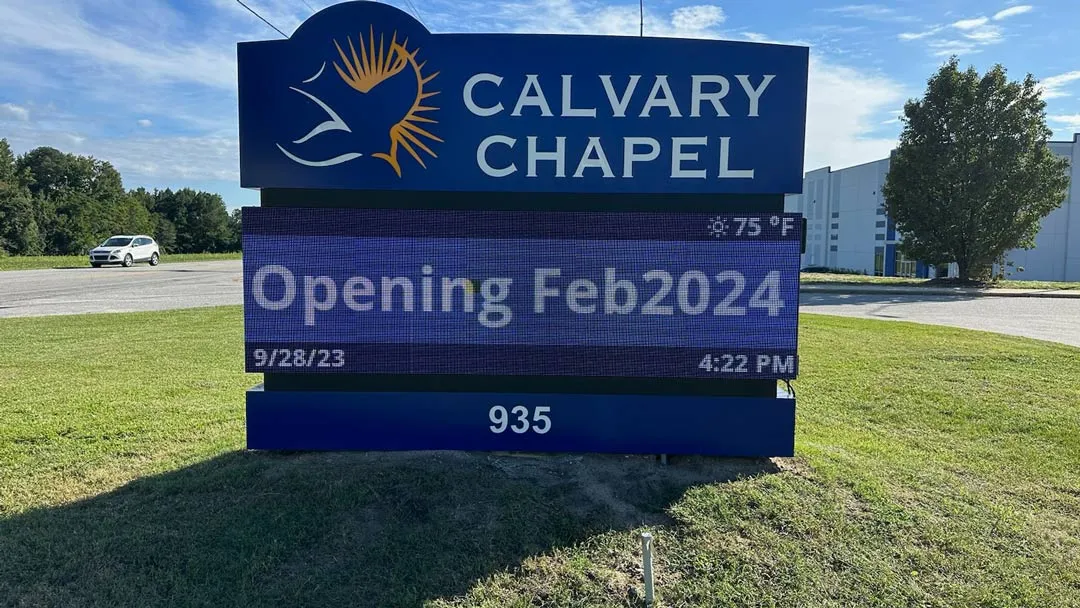
LED and illuminated monument signs add lighting, an electronic message board, or both. Churches, schools and community buildings like them because the message can change every week without anyone climbing a ladder. The tradeoff is a higher price, an electrical connection at the sign, and local rules about how often the message may change.
Entrance and architectural signs are the walls, pillars and plaques at the front of a neighborhood, apartment community or campus. They are part sign and part landscape feature. They work best when the entrance itself is the landmark. The tradeoff is that they are custom from the ground up, so design and approval take longer.
Post and panel signs
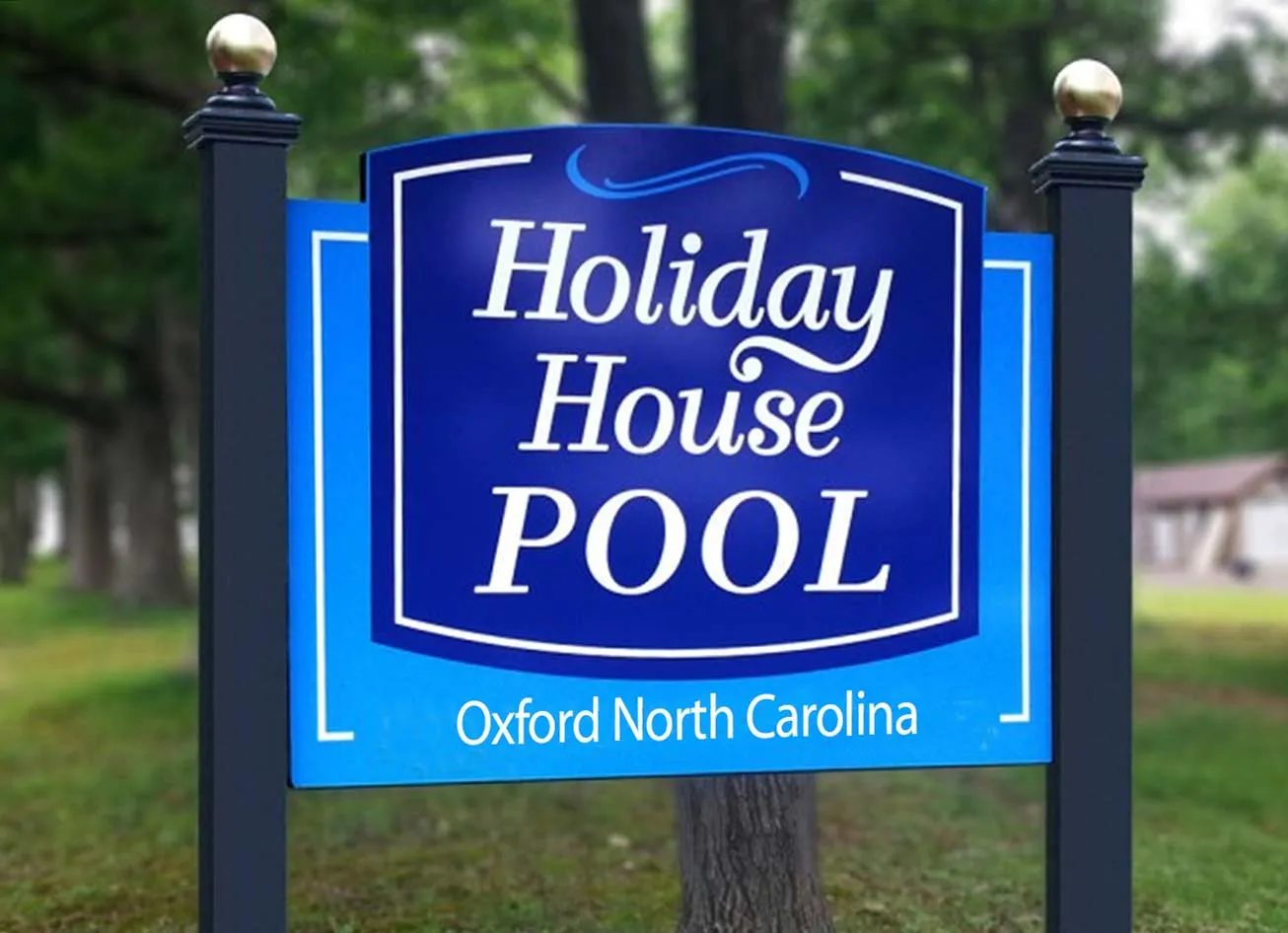
A post and panel sign is a flat sign panel mounted between or on visible posts. It is simpler and cheaper than a monument and reads well at a slower speed, which makes it a good fit for small offices, pools, clubhouses, directional signs and construction sites. Panels can be aluminum, PVC or carved HDU, a high density urethane board that looks like wood but does not rot. The tradeoff is presence. A post and panel sign looks lighter than a solid monument, and it is usually unlit.
Pylon and pole signs
A pylon or pole sign lifts your name high on one or more supports so it can be seen over traffic and parked cars. Gas stations, car dealers, hotels and shopping centers with several tenants rely on them because they are visible from far down the road. The tradeoff is that pylons are the most regulated ground sign: height and size limits vary by zoning district, and the structure needs engineering, a deep footing and heavy equipment to install. If your building sits close to a slow street, a pylon is usually more sign than you need.
Signs mounted on your building
Building signs confirm that people have found the right place. They matter most when your building is close to the road or when you share a plaza with other businesses. Our building and wall signs page shows the full range.
Channel letters
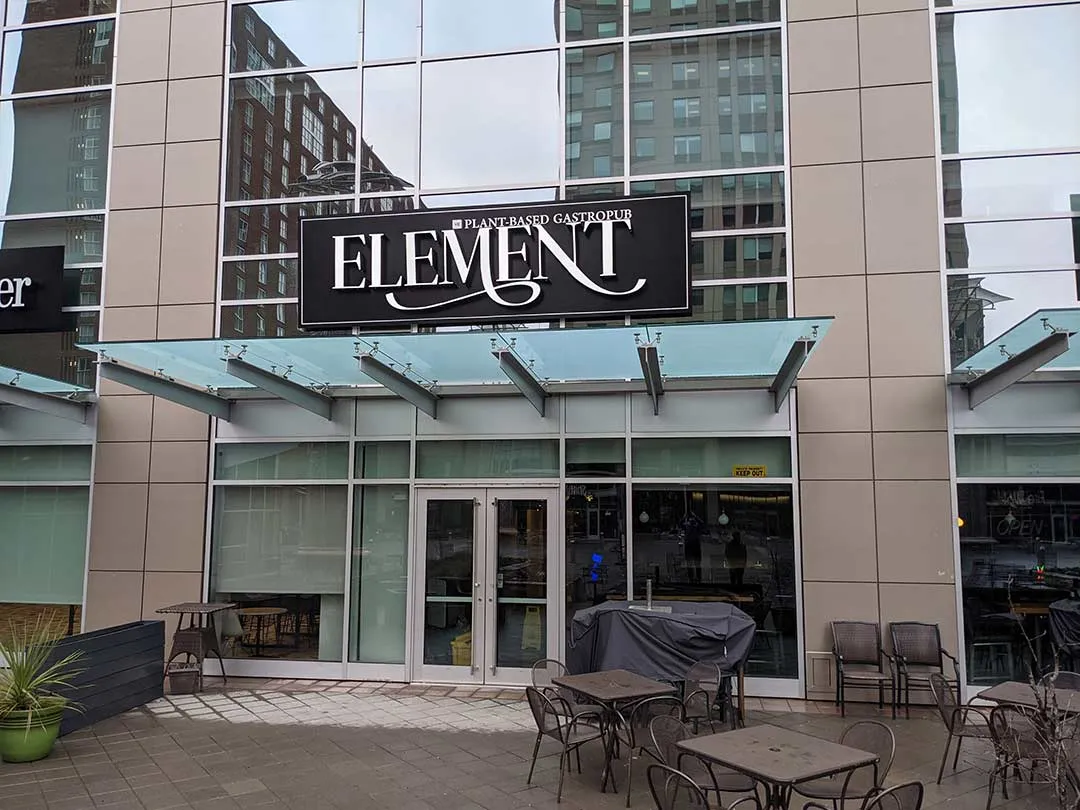
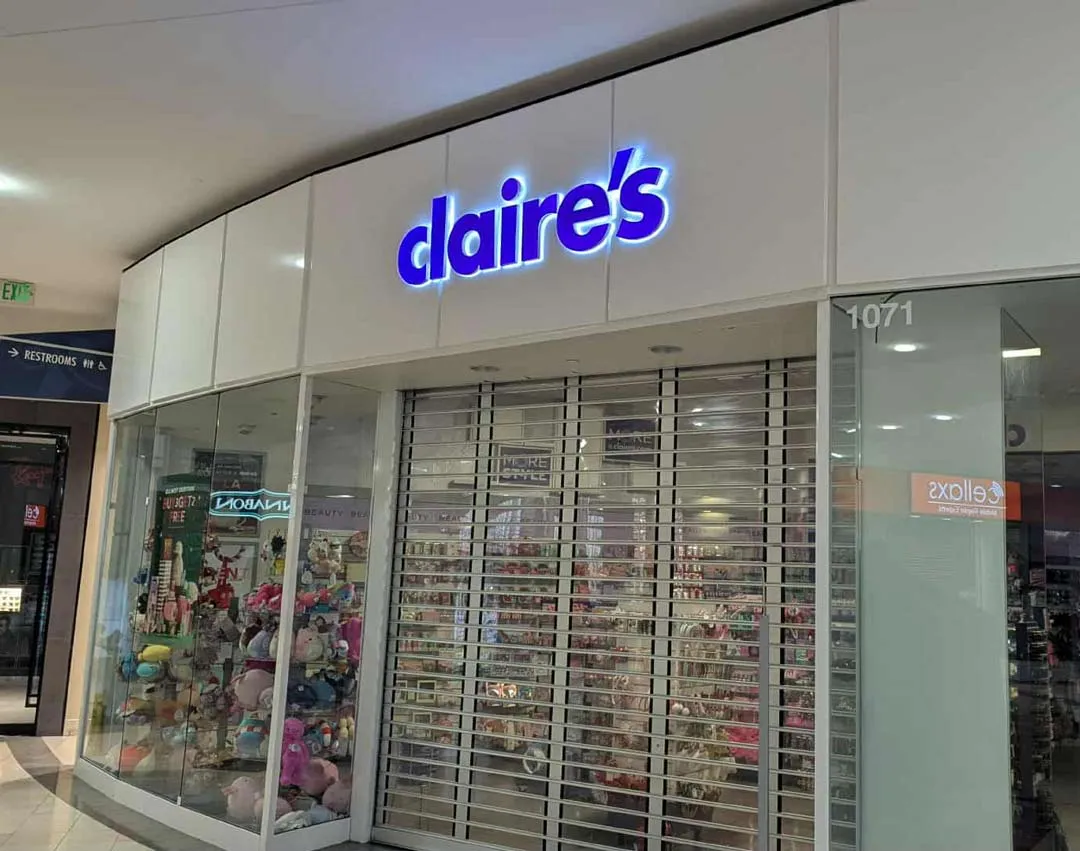
Channel letter signs are individual letters built like shallow metal cans, usually with LEDs inside and a colored acrylic face on the front. They can mount straight to the wall or to a narrow box called a raceway that hides the wiring. Channel letters are the standard look in most shopping centers, and many landlords require them. They read clearly from the parking lot day and night. The tradeoff is cost per letter and the electrical work, and long names get expensive.
Dimensional letters
Dimensional letters are cut from solid acrylic, PVC, aluminum or foam and mounted one by one. They give your name real depth and a clean, finished look without wiring. They suit offices, salons, restaurants with good street lighting, and lobbies. The tradeoff is that they are unlit on their own. You can light them with a lamp aimed at the wall, but they will not glow the way channel letters do.
Storefront and blade signs
A storefront sign is less a single product than a plan for the whole front of your space: the main sign over the door, lettering on the glass, and anything hanging near the entrance. It is where most retail shops and restaurants start.
A blade or projecting sign sticks out from the wall at a right angle, so people walking along the sidewalk can read it head on instead of from the side. Blade signs work best on walkable streets, under covered walkways and in downtown storefronts. The tradeoff is size. Projecting signs are usually small, need solid wall blocking to hang safely, and need a permit in Raleigh like other wall mounted signs.
Cabinet signs
A cabinet sign, also called a box sign or light box, is a single enclosure with a translucent face lit from inside. It can mount on a wall, sit on a pole, or fit into a monument base. Cabinets are affordable and sturdy, and when you rebrand you can often replace just the face instead of the whole sign. The tradeoff is the look. A flat lit box reads as practical rather than custom, and some shopping centers do not allow them.
Lit signs or unlit signs
Almost every type above comes in a lit and an unlit version, so it helps to think about lighting as its own decision. Our illuminated signs page covers every lit option in detail.
Face lit signs glow through the front, like most channel letters and cabinets. They are the brightest and easiest to read at a distance.
Halo lit letters are mounted a little off the wall with the light shining backward, so each letter is outlined by a soft glow. They give a quieter, more upscale look that suits law firms, medical offices and restaurants. They are less legible from far away than face lit letters.
Externally lit signs are unlit signs with lamps aimed at them, such as gooseneck fixtures over a carved wall sign. They suit traditional buildings and historic districts.
Electronic message centers are programmable LED displays that change what they say. Our digital signage and LED signs pages explain the options. They are the most flexible type and the most regulated. In Raleigh, for example, the city’s code limits changeable copy to up to 50% of the sign area and says the message may not change more than 4 times in any 24 hour period, with an exception for time and temperature displays. Other towns set their own limits.
When you weigh a lit sign, count three costs beyond the sign itself: running power to the sign location, the extra permit paperwork a lit sign needs, and occasional service. The LEDs we build with are rated for 50,000 to 100,000 hours, which works out to roughly 10 to 15 years of normal use. An unlit sign skips all of that, so if your customers only find you in daylight, unlit is a reasonable way to spend less.
Signs inside your space
Interior signs take over once people are through the door. They help visitors find the right place, make the space look finished, and in some cases are required by law. Start with our interior signs page for the full picture.
ADA and braille signs identify permanent rooms such as restrooms, offices, exits and stairwells. Under the 2010 ADA Standards, signs that designate permanent rooms and spaces need raised characters and braille, mounted so the tactile characters are between 48 and 60 inches above the floor. Signs that are temporary and up for 7 days or less are exempt. If you are fitting out a new space, read our guide to ADA sign height requirements before you order.
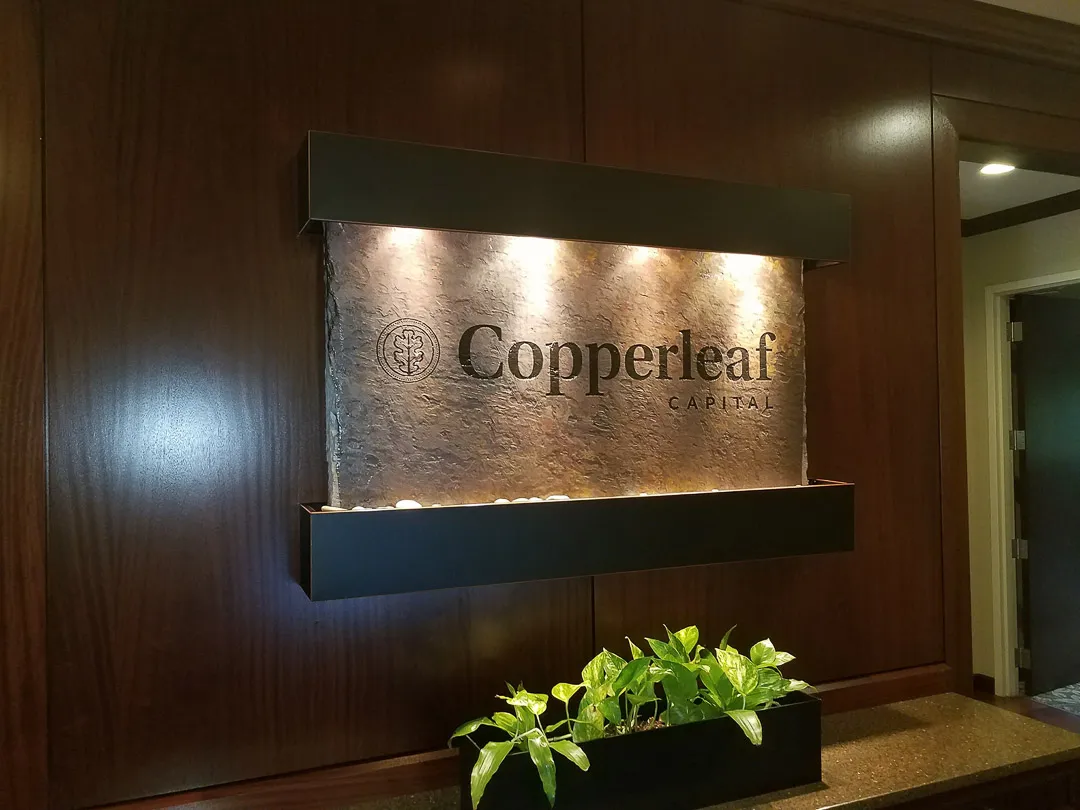
Lobby and reception signs put your logo on the wall behind the front desk, usually in acrylic, metal or dimensional letters, sometimes lit. They are often the first thing a client photographs or remembers, and they work best in offices, clinics and showrooms.
Wayfinding and directional signs guide people through larger buildings: directories, suite numbers, arrows and floor markers. They matter most in medical buildings, schools, churches and multi tenant offices, where a confused visitor is a late visitor. The tradeoff is planning. A good wayfinding system starts with a walk through and a sign list, not a single order.
Materials that cut across every type
Many sign types can be made from several materials, and the material often decides how long a sign lasts and how it looks.
Acrylic and PVC signs are the workhorses of interior signage and smaller outdoor panels. Acrylic has a glossy, glass like finish that suits lobbies and door signs. PVC board is lighter and less expensive, and it works for wall signs, menu boards and temporary panels.
Metal, aluminum and HDU signs are what lasting outdoor signs are usually made of. Aluminum panels hold their finish and do not rust. Brushed and painted metals give letters and plaques a crisp, permanent look. Carved HDU gives you the look of carved wood or stone without rot or splitting, which makes it a favorite for neighborhood entrances, restaurants with a traditional feel and professional offices that want something warmer than metal.
The tradeoff runs the usual way. Lighter, cheaper materials go up faster and cost less, but they look and wear less permanent. Heavier materials cost more and take longer, and they look the part for years.
Temporary and printed signs
Printed signs cover the gaps: a grand opening, a sale, a move, or the weeks between signing a lease and getting a permanent sign approved.
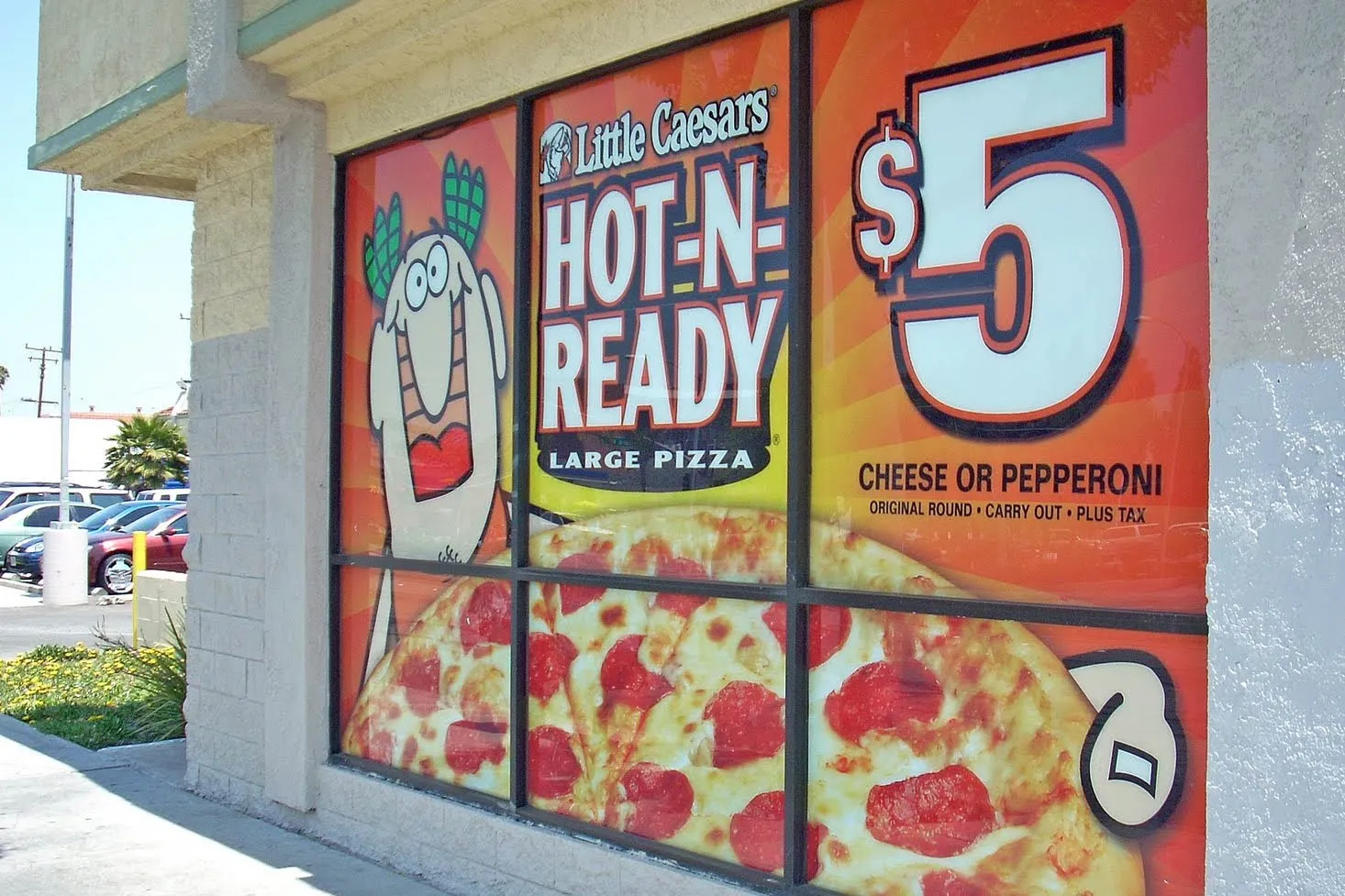
Large format printing covers window graphics, wall murals, posters and printed panels. Window graphics are one of the cheapest ways to put your name, hours and offer right at eye level, and frosted film can add privacy without blocking daylight. With lamination and UV resistant inks, most outdoor prints last 3 to 5 years or more.
Banners are vinyl or fabric signs with hemmed edges and grommets for hanging on a fence, railing or building. They are fast and cheap, and most banner orders are ready 3 to 5 business days after you approve the design. A vinyl banner outdoors in North Carolina usually lasts 1 to 3 years, depending on sun and wind. The tradeoff is permanence and rules. Raleigh’s code allows banners, flags and similar windblown signs for special events for a total of no more than 30 days after a temporary sign permit is issued, and temporary signs are not allowed in the right of way.
Sandwich boards are another common temporary sign. To put an A-frame on a public sidewalk in downtown Raleigh, you need a minor encroachment permit, and the sign can be no bigger than 6 square feet, 3 feet high and 2 feet wide. It must leave at least 5 feet of clear sidewalk. The application also asks for proof of $1 million in liability insurance.
The types side by side
Here is the whole list in one place. “Lit or unlit” shows the usual choice. Many types can be built either way.
| Sign type | Best for | Lit or unlit |
|---|---|---|
| Monument | Buildings set back from the road | Either |
| Brick and stone monument | Neighborhoods, churches, campuses | Usually unlit or spot lit |
| LED monument | Changing messages at the entrance | Lit |
| Entrance and architectural | Community and campus entrances | Either |
| Post and panel | Small offices, pools, directions | Usually unlit |
| Pylon and pole | Busy roads, shared centers | Lit |
| Building and wall | Confirming the right building | Either |
| Channel letters | Shopping centers, night trade | Lit |
| Storefront | Shops and restaurants in plazas | Either |
| Illuminated | Businesses open after dark | Lit |
| Cabinet | Budget lit signs, easy rebrands | Lit |
| Blade | Sidewalk and walkway traffic | Either |
| Dimensional letters | Clean daytime building names | Unlit |
| Digital signage | Messages that change often | Lit |
| Interior | Inside offices and clinics | Usually unlit |
| ADA and braille | Permanent rooms, restrooms, exits | Unlit |
| Lobby | Reception walls | Either |
| Wayfinding | Large or multi tenant buildings | Usually unlit |
| Acrylic and PVC | Lobbies, doors, panels | Usually unlit |
| Metal and HDU | Lasting outdoor panels, carved signs | Usually unlit |
| Banners | Openings, sales, events | Unlit |
| Large format printing | Windows, walls, murals | Unlit |
A table like this makes the types look separate, but in practice they combine. A restaurant in a shopping center might have channel letters over the door, a blade sign under the walkway, window graphics with its hours, and a grand opening banner for the first month. A medical office might have a monument at the driveway, dimensional letters on the building, a lobby sign and a full set of ADA room signs. An HOA might need only entrance signs and a few directional panels.
So rather than picking one type, sketch the path a customer takes from the road to your front desk. Note each point where they could hesitate or miss you. Those points tell you which types you need, and which ones would just be nice to have. If you are working with a tight budget, put the money into the sign at the first point of hesitation, since that is the one that brings people onto the property.
How long each type takes, and what it costs
Time matters as much as price when you are opening on a deadline. The chart below shows the typical lead times we publish for our main sign types. These count from design or proof approval to installation for most types, and from the first site visit for monuments. Permit review is the biggest variable, and large or phased projects take longer.
Price follows the same pattern as time. The more a sign needs a foundation, electricity or custom fabrication, the more it costs. As a rough guide from our own published ranges: a simple PVC sign can start at a few hundred dollars, a post and panel sign at around $1,500, and a small storefront set of channel letters at a few thousand. Custom lit monuments in stone or brick usually run $5,000 to $25,000 or more. A single ADA room sign typically runs $30 to $150, depending on material. These are starting points, not quotes. Size, materials, lighting and the site all change the number, and permit fees are separate.
For a fuller breakdown of what moves the price, read our guide to how much a business sign costs.
Where to start
If you already know the type you need, the page for that sign type is the best next stop. If you are still deciding, our custom business signs page is built for that stage, and we can look at your building, your street and your town’s rules with you. Raleigh Sign Solutions has been making signs in North Raleigh since 2009 and handles design, permits, fabrication and installation in one shop. When you are ready, request a free quote and tell us where your customers come from. We will suggest the types that fit.
Frequently asked questions
What type of sign is best for a small business?
The one your customers can see from where they are when they look for you. A shop in a plaza usually needs a storefront sign over the door. An office set back from the road usually needs a ground sign near the entrance. Most small businesses start with one main exterior sign and add a door or window graphic.
What is the difference between a monument sign and a pylon sign?
A monument sign sits low on a solid base near the entrance, so drivers read it as they turn in. A pylon sign stands on one or more tall supports so it can be seen over traffic and parked cars from farther away. Pylons suit busy roads and shared centers. Monuments suit offices, churches, neighborhoods and campuses.
Do all business signs need a permit in Raleigh?
Most do. The City of Raleigh says wall signs, ground signs, projecting signs and temporary signs all need a permit when the advertising can be seen from the public right of way. Interior signs that cannot be seen from the street usually do not. Other Triangle towns have their own rules, and landlords and HOAs often add an approval step.
How long does a business sign last?
It depends on the type. A vinyl banner outdoors in North Carolina usually lasts 1 to 3 years. Laminated large format prints last about 3 to 5 years or more outside. The LEDs in the lit signs we build are rated for 50,000 to 100,000 hours. Stone and brick last as long as the property, and aluminum holds its finish for years.
Should my sign be lit?
If people look for you after dark, or you are open in the evening, a lit sign keeps working when the sun goes down. If your hours are daytime only and the sign faces good daylight, an unlit sign with strong contrast can do the job for less money and less upkeep.